Organized AILeaders who build · Austin Find your level founding cohort · open
For leaders who build · Austin

You've used the agents.Now build the tools your team runs on.

Organized AI starts where AI fluency programs and founder masterminds leave off. It's for people dedicated to leading their team and building useful tools for themselves and the people they lead: learn how agents work underneath, get certified on something you shipped, and hand off a tailored build when you'd rather not build it yourself.
300Community members
8Recorded talks
4Levels to certify
6wkFree cohort
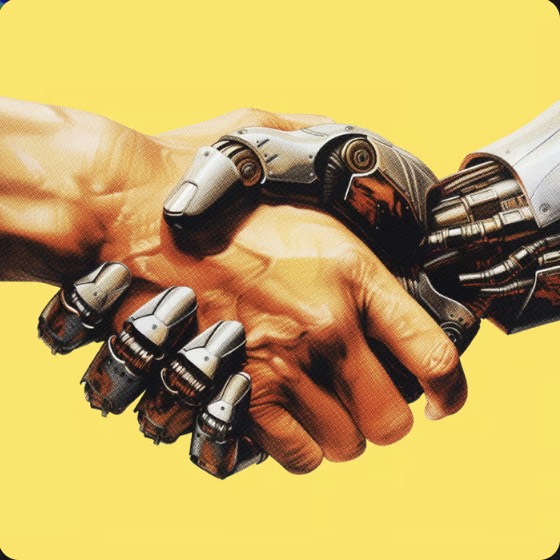
A human hand and a chrome machine hand locked in a handshake on a yellow field L1 → L4 Organized AI
The handshake already happened · Grip back
The offer in 90 seconds

From the chat window to tools your team runs on.

Four levels, a free six-week founding cohort, certification on shipped work, and tailored builds when you'd rather hand it off.

90 secVoiceoverCaptions on screen
Find your level · Grip back
Where people stall

Most teams stop at the chat window.

Fluency without understanding

Prompting gets you started. Without knowing how context, tools and evals work, it's hard to trust what you built or fix it when it breaks.

Too many tools, no verdicts

Something new ships every week. Few people will tell you which ones move the work forward and which to skip.

Advice with no build

Most sessions end at "here's what you could do." The leverage is in the next step, so that's where we spend the time.

Where we fit

We start where fluency programs leave off.

Fluency training for non-technical teams and founder masterminds are good places to begin. Organized AI is the next step, for people who lead a team and want to build the tools it runs on: the engineering underneath, proof of what you built, and builds shaped to one business.

CompareFluency programs and mastermindsOrganized AI
Who it's forTeams learning to use AI tools day to dayLeaders building useful tools for themselves and their team
Starting pointNo technical background neededYou already use AI and coding agents
What you learnPrompting, role playbooks, company knowledge basesHow agents work underneath: context, tools and MCP, evals, observability, deployment
How it's taughtVideos, live demos, peer exchangeBuild sessions on your own workflow, grouped by level and industry
ProofTestimonials and completionA certification tied to a shipped build, reviewed a level above
When you'd rather not buildTemplates to adaptA tailored build for a customer of one, in your accounts, explained to your team
The framework

The Operator's Path

The first three levels follow how operators actually adopt AI, shaped with supply chain operator Aaron Alpeter of Izba: meet people in the browser, build fluency on real work, then move to desktop apps, local models and custom agents. Level 4 is for people ready to run AI for a team and teach it.

L1Browser AI

Explorer

Uses ChatGPT, Claude or Gemini for one-off tasks.

You learn
Giving the model context, checking its work, and keeping prompts that work.
To certify
One weekly task moved to AI, with the time it took before and after.
L2Fluency

Practitioner

Uses AI on real work every week.

You learn
Projects and connectors, desktop apps, and turning a task into a workflow others can repeat.
To certify
A workflow your team reuses, written up with a measured result.
L3Agents

Builder

Connects tools, data and agents. Ships with coding agents.

You learn
Claude Code and MCP, Cloudflare Workers, local models, evals and observability.
To certify
A deployed tool or agent with evals, walked through in a code review.
L4Teams

Lead

Runs AI for a team and teaches it to others.

You learn
GitOps and CI/CD, infrastructure as code, observability and rollback, eval gates, model routing and cost, governance.
To certify
Coached a cohort pod and shipped a build a real customer uses, through a reviewed pipeline with evals in CI and a tested rollback.
For leaders who build for their team →
Quick check: where do you start?

Tick what you've already done. Example answers are filled in.

Shipping to production

Lead means you ship for other people the way a careful engineering team would. Tick the practices you use on what you ship today.

Likely starting point
L2
Practitioner

You use AI on real work. The next step is connecting it to your data and building your first agent.

Production practice0 / 10

Lead takes 7 of 10, plus building for others and helping them adopt it.

Take the full placement ↗
How we teach

Every session is a build session.

Start with the problem.

We find the workflow that costs you the most time, then build the fix together.

Fluency before code.

Not everyone needs to code. Everyone needs to know what's possible and what's worth doing.

Leaders set the pace.

A company moves on AI about as fast as its founder understands it, so leaders learn alongside their teams.

Measure before you decide.

Collect the data on how the work runs today. Then choose the tool.

Evaluate before you scale.

Every build gets tested against real cases before more people depend on it.

Own what you build.

Portable workflows in your own accounts, documented so your team can keep them running.

Recent sessions

Eight engineering talks. All recorded.

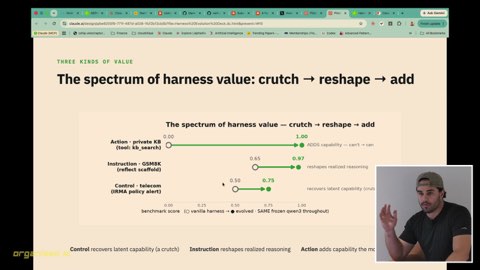
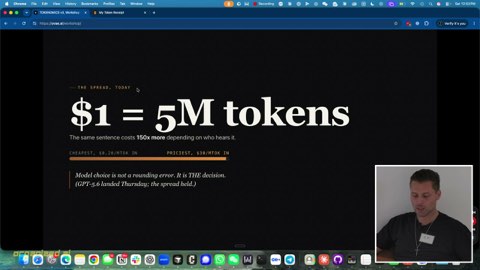
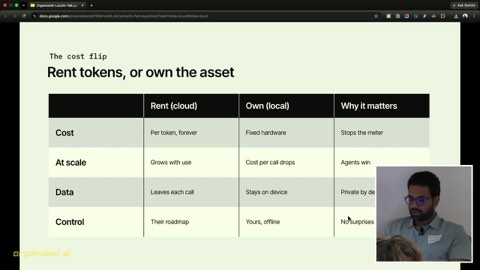
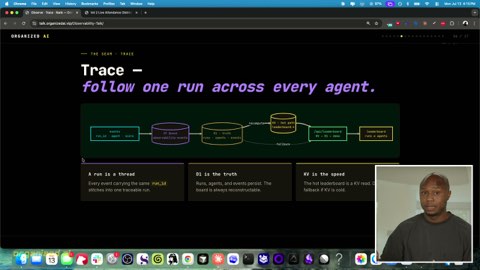
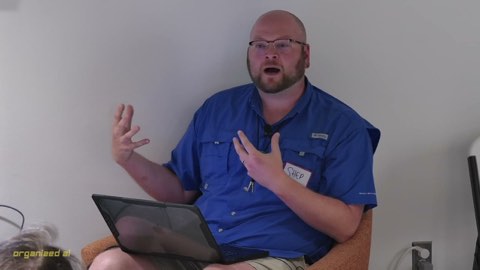
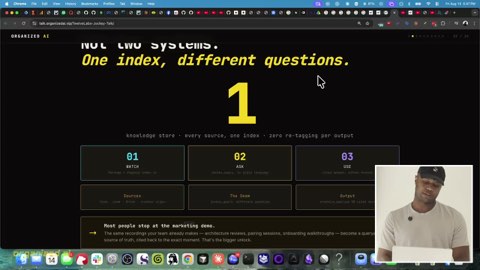
This is the depth the cohort works at. Every workshop talk ships with a companion module in the open-source repo: code, prompts and docs behind each demo.
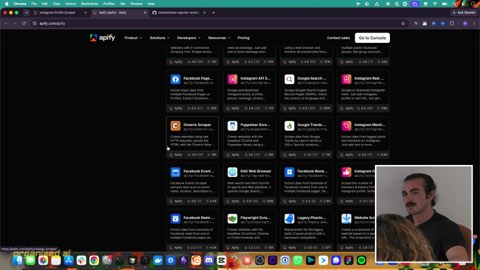
10 Jul 2026Vol 2 · The Agentic Engineering Stack Workshops
14 Aug 2026How To Series · TwelveLabs for Marketing Workflows
Certification

Certified on work you shipped.

Each level has its own certification. You earn it with evidence: a working build, a measured result, and a review by someone a level above you.

  1. Place

    Take the placement. It checks usage, hands-on work and five scenario questions, then puts you in a cohort with people at your level and in your industry.

  2. Build

    Work on your own problem in a group of 10 to 15. Bring a real workflow from your job and build it during the sessions.

  3. Review

    A certified member from the level above reviews your evidence. Pass, and you get a credential that links to the work itself.

Organized AIExample
Level 3
Builder · Certified
Member
Sample Member, Ops lead
Evidence
Freight quote normalizer on Cloudflare Workers, 42 eval cases
Reviewed by
Level 4 Lead, code walkthrough
Track
Operators · supply chain
OA-L3-EXAMPLEcredentials/oa-l3-example →

Coaching runs down the ladder.

Certified Builders and Leads coach newer members in their pod. Teaching the level below is part of earning Level 4.

Credentials that open doors.

Brands and dev shops can find certified members for real projects. We plan to have the credential co-signed by industry partners; until then it stands on the reviewed work.

Founding cohort

Free. Six weeks. One hour a week.

We group people by level and industry. The first track is supply chain and operations. Bring a real workflow and leave with it built, or with a clear next step.

Week 1

Place and pick

Placement, meet your pod, choose one workflow.

Week 2

First version

Build session on the workflow you chose.

Week 3

Connect your data

Wire it to the files and tools you already use.

Week 4

Measure it

Compare time and quality against how it ran before.

Week 5

Peer review

Pods trade builds and test each other's work.

Week 6

Demo and certify

Show the work. Reviews for certification start here.

$0Founding cohort
10–15Per cohort, same level
1 hrA week, live + recorded

At the end we ask what the six weeks were worth to you. Your answers set the price of the next cohort.

Tracks

Two tracks, one ladder.

Tailored builds.
Rather have it built for you? We scope and build for a customer of one, in your accounts with your data, then walk your team through how it works so they can run it.

How builds work ↗
Community

Learn in public, in Austin and online.

300Austin community members

From first-time prompters to people running agents in production.

  • Build nights

    In person

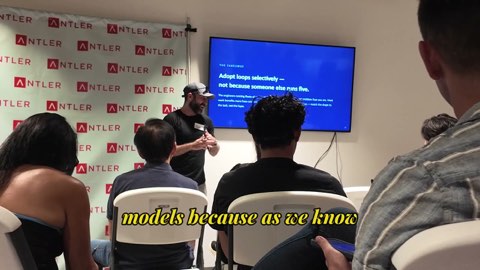
    Bring a laptop and a problem. Hosted at Antler, 800 Brazos St #340, Austin.

  • Office hours

    Weekly · online

    Drop in with what you're stuck on. Every level is welcome.

  • Workshops and hackathons

    Recorded ↗

    Themed builds like LLM-as-a-judge and the agentic engineering stack, judged live and recorded.

  • Free guides

    Guides ↗

    Self-directed learning stays free. You pay for cohorts, coaching and certification.

Get a seat

Join the founding cohort.

Tell us where you are and what you've used. We'll place you with people at your level and email you before the first session.

Prefer to see your level first? Take the placement ↗

Services

Three tiers. One infrastructure philosophy. Your hardware.

Tier 1

Agent Setup

Unbox to production. 6–12 hours.
  • Complete OpenClaw installation
  • Mac Mini / MacBook Pro config
  • FrawdBot security included
  • N8N integration layer (200+)
  • SSH remote management
  • Disappearing API key handling
Tier 2 · Most Popular

Managed Infrastructure

Ongoing SRE. Monthly retainer.
  • Everything in Setup, plus:
  • SRE dashboard system
  • ClickHouse caching layer
  • LangFuse API routing
  • PostHog observability
  • Prompt injection protection
  • API gateway + policy enforcement
Tier 3

Enterprise

SOC 2. Multi-agent. Edge fleet.
  • Everything in Managed, plus:
  • SOC 2 compliance architecture
  • Multi-agent orchestration
  • Department-level access control
  • Tailscale edge deployment
  • Hardware leasing facilitation
  • Dedicated Slack support

Organized Teams

Run AI agent teams like a company — with org structures, budgets, and Slack as the control plane. Choose your deployment.

Cloud Deploy

Organized Teams — Cloud

Full-stack agent workforce on managed servers.
  • OpenClaw agent orchestration
  • Claude Code inside Slack
  • Paperclip org charts, goals & governance
  • One-command cloud deploy (EasyClaw)
  • ClawBox GUI (Commonstack)
  • Auto-rotating API keys
  • FrawdBot insider threat detection
  • Tailscale secure mesh
  • Multi-model routing via Commonstack
  • OTEL observability + KPI dashboards
  • PostHog product analytics + session replay
  • Pay-as-you-go token billing
Learn More →
Local Deploy

Organized Teams — Local

Fully private. Fully local. Zero cloud dependency.
  • Qwen-Agent framework (local inference)
  • OpenCode / Aider inside Slack
  • Paperclip org charts, goals & governance
  • Mac Mini / MacBook Pro deployment
  • ClawBox GUI (local instance)
  • FrawdBot behavioral monitoring
  • Complete data sovereignty
  • Open-weight models (Qwen, Llama, Mistral)
  • Zero API costs or external billing
  • On-device observability + metrics
  • Self-hosted PostHog analytics
  • No external dependencies
Learn More →

Papers

Engineering documentation from real deployments and production conversations.

March 2026 · Jordaaan Hill · 12 min read

The Agent Infrastructure Stack

How Four Open-Source Projects Define the Future of Managed AI Services
A technical analysis of the emerging agent infrastructure stack — from Stripe's one-shot coding agents and Alibaba's sandbox isolation to Qwen's agent framework and Coinbase's agent payment protocol. Together they reveal a clear infrastructure layer that managed service providers must build on.
Stripe Minions OpenSandbox Qwen-Agent x402 MCP
Read Paper →
March 2026 · Jordaaan Hill & Colin McNamara · 10 min read

The Infrastructure Playbook

Building Managed AI Agent Services from First Principles
A technical guide to building managed AI agent infrastructure. Covers the database-in-front-of-database pattern, SRE dashboard architecture, API gateway design, fraud detection integration, and SOC 2 compliance — all derived from production deployments.
ClickHouse LangFuse SOC 2 SRE
Read Paper →
March 2026 · Jordaaan Hill & Colin McNamara · 8 min read

Edge Compute Economics

Why Customer Hardware Beats the Cloud for AI Agent Deployment
An analysis of deploying AI agents on customer-owned hardware versus cloud infrastructure. Covers the distributed compute model, Tailscale tunnel architecture, configuration management at the edge, and the economics that make on-premise Mac deployments more cost-effective at scale.
Edge Tailscale Mac Mini Cost Analysis
Read Paper →
March 2026 · Jordaaan Hill · 14 min read

The Observability Architecture

OTEL + Claude Code Hooks → KPI Dashboards for AI Agent Infrastructure
The complete eight-layer observability stack: from Claude Code hooks and OpenTelemetry pipelines through token float economics and fleet orchestration to FrawdBot behavioral security. Covers semantic caching, provider arbitrage, 16-service port maps, and seven metric namespaces powering production agent deployments.
OpenTelemetry Langfuse FrawdBot Token Float ClawHerd
Read Paper →

LLM Wiki

A field guide to the large language models that power the agent era. Vendor, lineage, context windows, and where each model fits in a production stack.

Why this exists. Choosing an LLM is an infrastructure decision: context window, tool-use reliability, hosting model, and licensing shape everything downstream. These entries are curated from production deployments, not launch announcements.
Pi · Wiki Agent
Ask Pi anything about the entries below. Pi reads, compares, and opens them for you.
Open Pi Agent →
Frontier · Closed Weights
Claude
Anthropic
Opus 4.7 · Sonnet 4.6 · Haiku 4.5
Anthropic's model family, built around Constitutional AI and tool-use reliability. Strong on long-context reasoning, code editing, and multi-step agent loops. Default choice for Claude Code and most agent frameworks in the Claw ecosystem.
200K–1M ctx Tool Use Prompt Caching API
Read Entry →
GPT
OpenAI
GPT-5 · GPT-4.1 · o-series
OpenAI's flagship line. Strong general reasoning, function calling, and the broadest third-party tooling. The o-series reasoning models trade latency for deeper chain-of-thought. Widely used as a baseline for comparison.
128K+ ctx Reasoning Function Calling API
Read Entry →
Gemini
Google
Gemini 2.5 Pro · Flash · Nano
Google's multimodal family with a native 1M+ token context window. Deep integration with Google Cloud, Vertex AI, and Workspace. Flash variants target high-throughput, low-latency agent workloads.
1M ctx Multimodal Vertex AI API
Read Entry →
Pi
Inflection AI
Inflection-3 · Inflection-2.5 · Pi (consumer agent)
Inflection's "personal intelligence" agent and the Inflection model line. Tuned for conversational warmth, long-running memory, and real-time voice. Post-Microsoft acquihire the focus is enterprise licensing; the distinctive supportive tone remains the differentiator.
Conversational Empathic Long Memory Voice
Read Entry →
Nova
Amazon
Nova Pro · Lite · Micro · Canvas · Reel
Amazon's first-party model family, Bedrock-native. Aggressive cost-per-token tiers, 300K context on Pro and Lite, plus Canvas for image and Reel for video. The pragmatic pick when AWS is the architectural center of gravity.
Bedrock Multimodal Low Cost AWS-native
Read Entry →
Open Weights · Self-Hostable
Llama
Meta
Llama 4 · Llama 3.3 · Llama Guard
Meta's open-weights family — the reference open model for self-hosted deployments. Strong community ecosystem, quantized variants run on Mac Mini edge hardware, permissive license for most commercial use.
Open Weights Self-Host Edge Llama License
Read Entry →
Qwen
Alibaba
Qwen3 · Qwen3-Coder · Qwen-Agent
Alibaba's open-weights family, paired with the Qwen-Agent framework. Qwen3-Coder is the reference open model for coding agents. Strong tool-use and multilingual capabilities. Powers OpenClaw and NanoClaw in the Claw ecosystem.
Open Weights Agent Framework Coder Apache 2.0
Read Entry →
Mistral
Mistral AI
Mistral Large · Mixtral · Codestral
European open-weights family from Paris-based Mistral AI. Mixture-of-experts architectures, efficient inference, and EU data residency. Codestral targets code-specific workloads. Popular for regulated deployments.
Open Weights MoE EU Hosting Apache 2.0
Read Entry →
DeepSeek
DeepSeek
DeepSeek-V3 · DeepSeek-R1
Chinese open-weights lab that shipped DeepSeek-R1, the first open reasoning model to match o1-class performance. Aggressive pricing on the hosted API, MIT-licensed weights, strong on math and code.
Open Weights Reasoning MIT License Low Cost
Read Entry →
Grok
xAI
Grok 4 · Grok Code Fast
xAI's model family with real-time X integration and a large context window. Grok Code Fast targets agentic coding with competitive latency. Weights for older Grok versions released under Apache-style terms.
Real-time Coder API Partial Open
Read Entry →
Hermes
Nous Research
Hermes 4 · Hermes 3 · Hermes 2 Pro · DeepHermes
Independent research lab's flagship fine-tune line. Built on Llama, Qwen, and Mistral bases. Best-in-class open-weights function calling, steerable alignment that respects the system prompt, and YaRN-extended context windows.
Open Weights Function Calling Agentic Steerable
Read Entry →
Kimi
Moonshot AI
Kimi K2 · Kimi K1.5 · Kimi Chat
Moonshot AI's family — pioneered 2M-token context in Kimi Chat and shipped K2 as a trillion-parameter-class open-weights MoE. K1.5 is the reasoning counterpart. Strong on long-context retrieval.
Open Weights Long Context MoE Reasoning
Read Entry →
Command
Cohere
Command A · Command R+ · Command R · Embed · Rerank
Cohere's enterprise-grounded line. RAG as a first-class primitive, cited answers by default, and a tightly integrated embedding + reranker stack. Strong multilingual coverage across 100+ languages.
RAG-first Multilingual Enterprise CC-BY-NC
Read Entry →
Phi
Microsoft
Phi-4 · Phi-4-mini · Phi-3.5 (MoE, vision)
Microsoft Research's small-model family. "Textbooks are all you need" — curated and synthetic training data yields reasoning performance that punches above the 1B–14B weight class. MIT licensed. Default choice for on-device.
Open Weights Small Model MIT License Edge
Read Entry →
Gemma
Google
Gemma 3 · CodeGemma · PaliGemma · ShieldGemma
Google's open-weights line — derived from Gemini research. 1B–27B sizes, native multimodality in Gemma 3, strong multilingual coverage, permissive terms that beat Llama's for most commercial use.
Open Weights Multimodal Multilingual Edge
Read Entry →
OLMo
Allen AI
OLMo 3 · OLMoE · Tülu · Dolma
Allen Institute for AI's fully-open family. Weights, pretraining corpus (Dolma), training framework, intermediate checkpoints, and evaluation suite all released under Apache 2.0. The reference for reproducible, auditable model provenance.
Fully Open Apache 2.0 Reproducible Research
Read Entry →
Agent Runtimes & Stacks
OpenClaw
Organized AI
Flagship Claw runtime · TypeScript · Qwen-Agent inner loop
The enterprise-tier agent runtime in the Claw ecosystem. 50+ first-party integrations, plugin system, department-specific loadouts, and a Claude Code Slack control plane. Runs on customer-owned Mac Mini edge hardware with FrawdBot behavioral security bundled in.
Agent Runtime Edge Deploy On-Premise Open Source
Read Guide →
NanoClaw
Organized AI
Python · Claude Agent SDK · Container Sandbox
The containerized, security-first Claw runtime. Every tool call runs in an isolated container with restricted network and filesystem. Built on Anthropic's Agent SDK. Use when untrusted input reaches the tool layer.
Agent Runtime Containerized Security-first Multi-Channel
Read Guide →
MicroClaw
Organized AI
Rust · Multi-Channel · Durable Memory
Chat-native Claw runtime. Same agent session follows a user across Slack, Discord, WhatsApp, SMS, Teams, and iMessage with layered memory and durable state. Provider-abstract LLM routing at runtime.
Agent Runtime Multi-Channel Provider-Abstract Durable
Read Guide →
PicoClaw
Organized AI · Sipeed
Go · <10MB RAM · RISC-V
IoT and embedded Claw runtime. Agent protocol on-device, inference offloaded to an upstream. Built with Sipeed to target $10 RISC-V boards, IP cameras, routers, and microcontrollers.
Agent Runtime IoT <10MB RAM RISC-V
Read Guide →
ZeroClaw
Organized AI
Rust · 3.4MB Binary · 22 Providers
Minimal-footprint Claw runtime. 3.4MB static Rust binary, sub-10ms cold start, under 5MB runtime RAM, 22 native AI providers. Built for serverless functions, edge workers, and sidecars.
Agent Runtime Minimal Serverless Multi-Provider
Read Guide →
ExoClaw
Organized AI
WASM Sandbox · 100+ AgentSkills · Deploy <60s
Managed cloud Claw runtime. WASM-sandboxed tool execution, sub-60-second provisioning, 100+ prebuilt AgentSkills, team workspaces, and real-time monitoring. Organized AI runs the infrastructure.
Agent Runtime Cloud Managed WASM Zero-Config
Read Guide →
Integrations & Recipes
Pi × LLM
Claw Mac Mini
Raspberry Pi client · Hermes agent gateway on the Mini
Pair a Raspberry Pi with the Claw Mac Mini as a cheap, always-on agent terminal. The Pi speaks to a Hermes-backed gateway served by OpenClaw over Tailscale, gets streaming responses, and accesses the full LLM Wiki as a cited tool. Covers setup, device scoping, security, and variants from Pi Zero to industrial CM4.
Raspberry Pi Hermes Gateway OpenClaw Tailscale
Read Recipe →

About

Infrastructure consultancy for the agent era.

Who We Are

Organized AI is an infrastructure consultancy specializing in AI agent deployment. We partner with Self-Improving Code (Colin McNamara) for enterprise-grade architecture and FrawdBot for insider threat detection.

We don't build agents. We build the infrastructure that makes agents production-ready — the SRE dashboards, the caching layers, the API gateways, the security monitoring, the edge deployments. The boring stuff that makes the exciting stuff work.

Our Principles

On-Premise First

Your Mac Mini, your office, your network, your data. Edge compute beats cloud for AI agent workloads — lower latency, better economics, full data sovereignty.

Framework-Agnostic

OpenClaw, Qwen-Agent, CrewAI, AutoGen — we don't care which framework you choose. 40,000+ options exist. The infrastructure underneath is the same.

Security by Default

FrawdBot behavioral analysis is bundled in every deployment. Not an upsell. 21,000 lines of detection engine monitoring for insider threats at machine velocity.

Contact

Tell us about your infrastructure needs.

Schedule Directly

30-minute consultation to scope your deployment.

[ Calendly Embed ]

Open Scheduling →

Direct

contact@organizedai.vip

Response Time

Under 24 hours for qualified inquiries.